
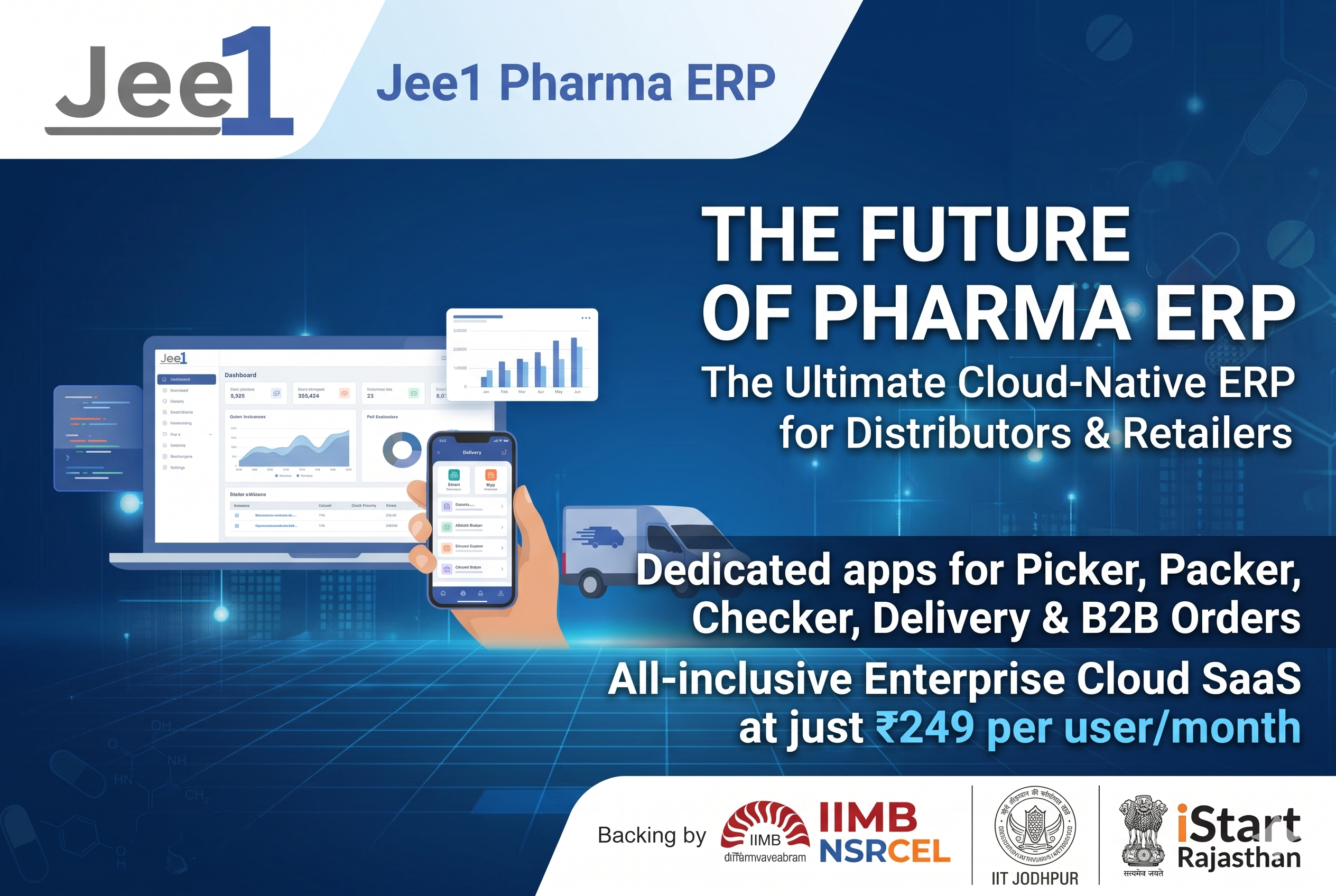

The Indian pharmaceutical supply chain is undergoing a massive technological transition. For decades, the industry—from vast wholesale distributors to neighborhood retail chemists—ran on localized desktop software. Today, the demand for multi-branch syncing, remote access, and zero-error warehouse logistics has pushed businesses toward the cloud. But not all “cloud” solutions are created equal.
In the race to modernize, businesses are weighing two distinct paths: paying a premium to host familiar legacy desktop software on virtual servers (like Marg Cloud) or adopting true cloud-native Software-as-a-Service (SaaS) platforms like the rapidly rising Jee1 Pharma ERP.
With elite institutional backing and disruptive economics, the landscape is shifting dramatically. Here is the definitive breakdown of what distributors and retailers need to know.
The Institutional Stamp of Approval
Trust and data security are paramount in pharmaceutical distribution. While legacy systems rely on decades of offline market presence, the new wave of pharma tech is being vetted by India’s top technological and business institutions.
Jee1 Pharma ERP has secured prominent backing and incubation support from IIM Bangalore’s NSRCEL, IIT Jodhpur, and iStart Rajasthan. This tier-one institutional validation signals a significant shift: the future of pharma supply chains relies on deep tech, scalable cloud infrastructure, and AI-driven automation rather than retrofitted desktop solutions.
Architecture: Hosted Desktop vs. True Cloud-Native
The fundamental difference between the current market leader’s cloud offering and modern alternatives lies in their architectural DNA.
- Marg Cloud (Hosted Legacy): This model takes traditional Windows-based desktop software and installs it on a remote virtual server. Users access it via Remote Desktop Protocols (RDP). While it achieves centralized data for multiple branches, users are essentially interacting with a desktop screen through an internet window. This can lead to lag during rapid billing and makes mobile access cumbersome.
- Jee1 Pharma ERP (Cloud-Native): Built entirely on modern web frameworks, Jee1 dynamically adapts to any browser or mobile device without RDP intermediaries. Crucially, it retains legacy keyboard shortcuts, allowing cashiers to maintain their lightning-fast, muscle-memory billing speeds while operating on a lag-free cloud infrastructure.
The Ecosystem: Moving Beyond the Billing Counter
Traditional software ties operations to the main ERP dashboard. But modern pharma distribution requires mobility on the warehouse floor and out on the road.
Jee1 ERP has completely bypassed the desktop constraint by launching a role-based mobile app ecosystem. Instead of paper trails or manual data entry, supply chains now utilize:
- Packer, Picker, and Checker Apps: Warehouse staff use dedicated mobile interfaces with barcode scanning to ensure zero-error fulfillment.
- Delivery Apps: Drivers track optimized routes, capture digital Proof of Delivery (POD), and update payment collections in real-time.
- Retailer & Distributor Apps: B2B partners access live inventory, scheme discovery, and instant ordering straight from their smartphones.
The True Cost of the Cloud: Financial Breakdown
The most disruptive element of the current market shift is pricing. Hosting legacy software on the cloud introduces heavy recurring server fees on top of standard maintenance contracts. Jee1 ERP’s cloud-native SaaS model removes the “server rental” middleman entirely.
Cost Comparison (Per User):
| Cost Component | Marg Basic Cloud (Hosted) | Jee1 Pharma ERP (SaaS) |
| Upfront License Fee | ₹10,300 | ₹0 |
| Year 1 Cloud/SaaS Fee | ₹7,500 (Server Hosting) | ₹2,988 (₹249/month x 12) |
| Total Year 1 Cost | ₹17,800 (+ GST) | ₹2,988 (+ GST) |
| Annual Renewal (Year 2+) | ₹11,490 (₹3,990 AMC + ₹7,500 Cloud) | ₹2,988 |
*Figures are approximate market baselines for single-user standard tiers. Taken from website and sales data available online.
Even for a traditional, static retail chemist with no immediate plans to expand, maintaining a localized legacy desktop system with mandatory AMCs is financially heavier than migrating to Jee1 ERP. At ₹249 per user per month, a business saves roughly 75% annually compared to a hosted legacy setup, while unlocking enterprise-grade logistics tools and an embedded AI assistant (Jeeva AI).
The Verdict
The choice for pharma distributors, stockists, and retailers is no longer just about software—it is about operational agility.
Marg ERP remains a deeply familiar, offline powerhouse for chemists who refuse to leave the traditional desktop environment. However, for businesses connecting multiple locations, deploying field staff, and looking to eliminate fulfillment errors, retrofitting desktop software into the cloud is an expensive stopgap.
Backed by institutions like IIMB-NSRCEL and IIT Jodhpur, Jee1 Pharma ERP has emerged as the definitive successor. By combining high-speed keyboard billing, an end-to-end mobile execution ecosystem, and aggressive pricing, it provides the technological infrastructure required for the next decade of Indian pharmaceutical distribution.

